
Sentient: An Argentine Court Recognizes Two Goldfish as Subjects of Rights
By Jesica Bon Denis, Founder and Executive Director, Animal Interseccional
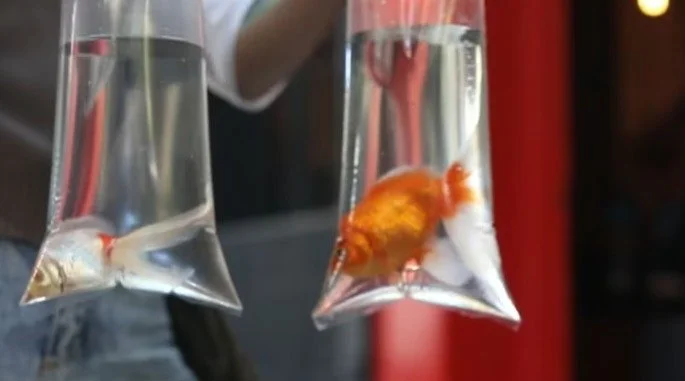
On July 14, 2026, a criminal court in Buenos Aires, Argentina (Criminal, Misdemeanor, and Minor Offenses Court of First Instance No. 12, Clerk's Office No. 23) approved a pretrial probation agreement that recognized two goldfish (scientifically known as Carassius auratus), later named Fede and Magui, as sentient beings and subjects of rights — not as material property. The case began at a sushi restaurant in the Recoleta neighborhood, where the fish lived in a 40-liter tank used as a decorative feature, under conditions that affected their physical and psychological health.
How the Case Came Together
The complaint was filed by the Argentine nonprofit Jaulas Vacías (Empty Cages), which reported a case of animal cruelty under Law 14,346 to the Specialized Prosecutorial Unit for Environmental Matters (UFEMA) and requested both the seizure of the animals and formal legal recognition of their status as subjects of rights. Over the course of the criminal proceedings, a veterinary expert assessment determined that the tank's conditions caused measurable stress and suffering for the fish, constituting a violation of Animal Protection Law 14,346. The court's ruling drew on precedents from appellate courts that had already extended recognition as subjects of rights to other non-human animals in the country, and approved the terms of conduct agreed between the defendant and UFEMA, which included transferring Fede and Magui to a 2,500-liter aquarium under the care of a responsible adopter. The court also approved a set of conditions the restaurant owner must meet for eight months: a ban on keeping animals in his care and a requirement to complete training in animal and environmental law.
Why It Matters Beyond This Case
This is the first ruling in Argentina to apply the criterion of sentience specifically to fish — a group of animals that even within animal protection movements themselves is often left out of the conversation. Fish are the animals killed in the greatest numbers globally, across all farmed or captured species, and remain among the most culturally invisible: rarely named, rarely mourned, rarely imagined as capable of suffering. The ruling also clarified that keeping fish is not prohibited in Argentina, but that conditions constituting mistreatment or inadequate care — such as insufficient space, feeding, or attention — can be penalized regardless of species.
Part of a Broader Trend
The Buenos Aires case joins a still-emerging but growing body of international jurisprudence extending legal recognition of sentience to fish, with developments in the European Union, New Zealand, Spain, and some jurisdictions in Canada and Australia. For organizations working across Latin America, where legal and cultural recognition of animal sentience is still being built case by case, this precedent offers something concrete to build on: proof that courts in the region can move — and are moving — in this direction.
At Animal Interseccional, as a member of the Aquatic Animal Alliance, we see rulings like this as part of a broader shift we're working to advance in Argentina and the region — one where animal protection is understood not as a marginal concern, but as part of how a society defines cruelty, dignity, equality, and justice. A small case like this one can be exactly the way legal systems learn to recognize beings they once refused to see at all.