
Cheap Shrimp: Research and Consequences
by Dr. Míriam Martínez Macipe, Animal Welfare Director at the Animal Welfare Observatory
Every year, the food industry kills more than 440 billion shrimp from aquaculture. The vast majority belong to the L. Vannamei species, or whiteleg shrimp. The main producing countries are China, Ecuador, India, Vietnam, and Indonesia.
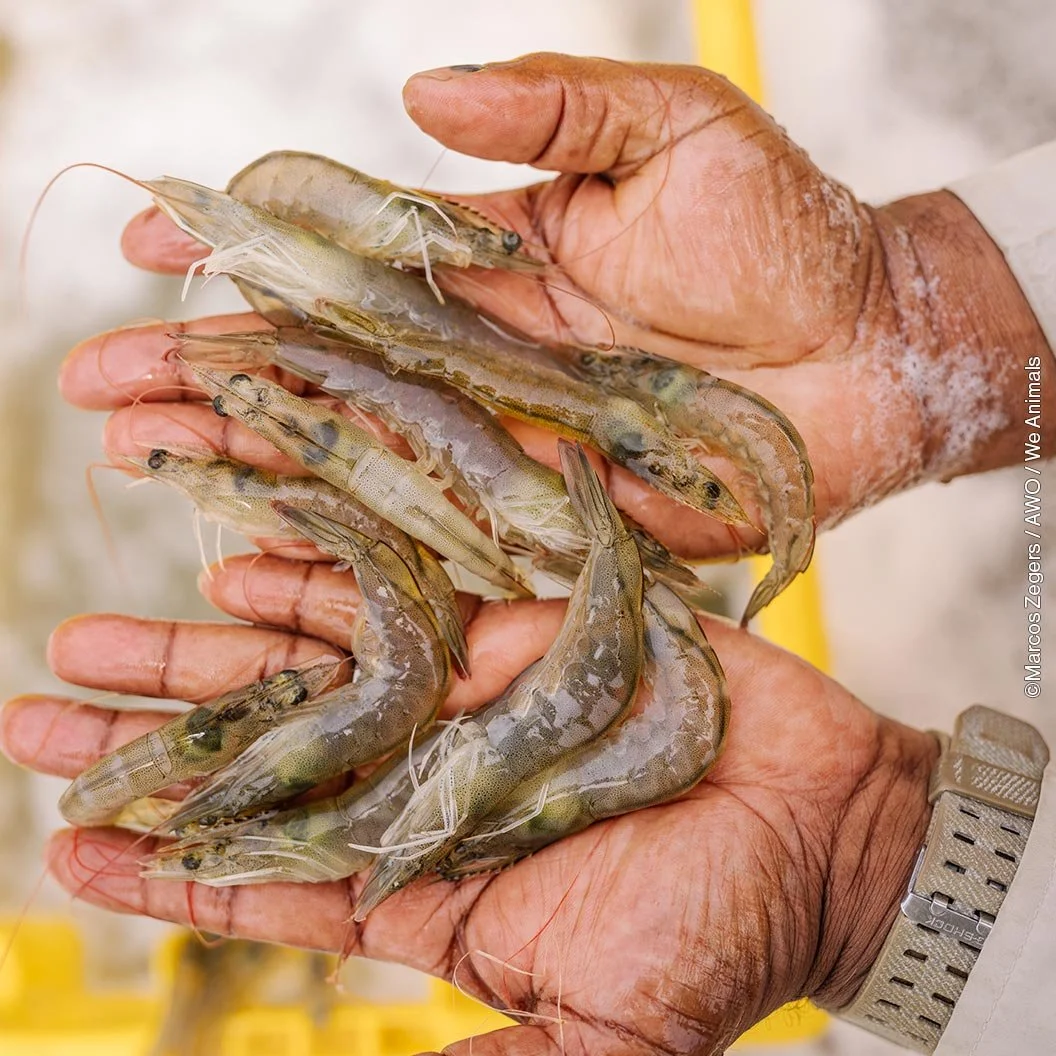
At the Animal Welfare Observatory, we decided to conduct an investigation to understand the consequences of this massive industry, in terms of animal welfare as well as environmental and social impact. To do this, we gathered graphic documentation of the industry provided by We Animals, an impact analysis and report prepared by Foodrise, along with the collaboration of Protección Animal Ecuador and the support of Eurogroup for Animals.
In the materials and information received about the industry in Ecuador, we were able to verify the link to the destruction of mangroves and the living conditions of shrimp farm workers. But we also discovered the stressful moment of slaughter for the shrimp, which are left to die directly on ice. Furthermore, the published report highlights that this business continues to expand, despite having destroyed 90% of the mangroves in some areas, and has become the country's primary economic driver, surpassing oil. The land dedicated to shrimp in Ecuador already covers 220,000 hectares. The harvest is mostly destined for consumption outside the country, and two exporting companies dominate the market, contributing to nearly a third of the export value.
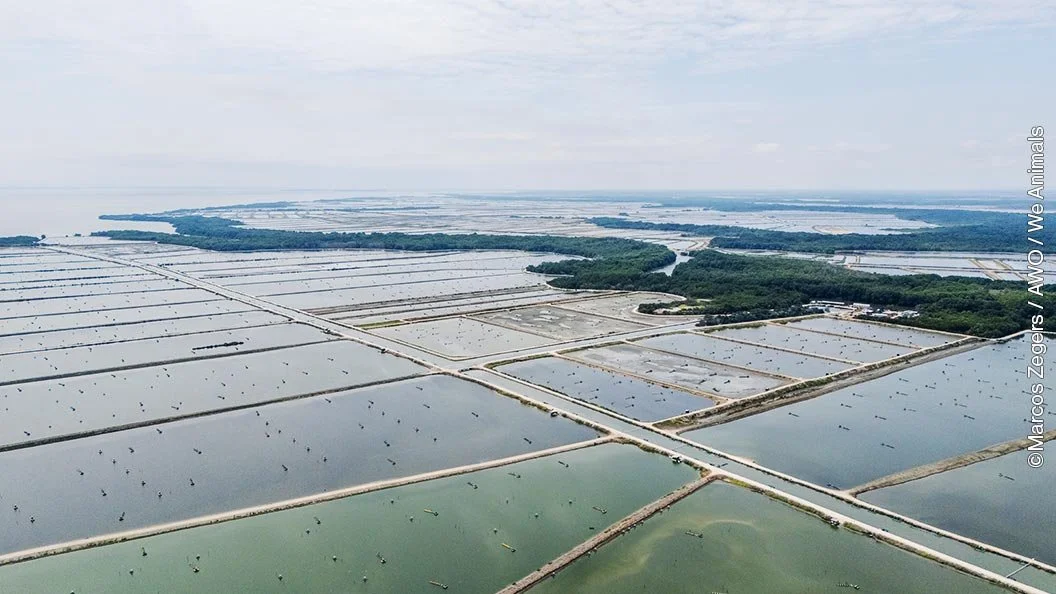
More than half of aquaculture shrimp imports into the European Union come from Ecuador. They arrive mainly through the Spanish port of Vigo, as Spain is the top consumer of the industrial shrimp entering Europe. It is estimated that 178,000 tons of fish are needed to feed all the shrimp arriving in Europe from Ecuador. These fish are mostly caught off the coasts of Ecuador, Peru, and Chile. In addition to this reliance on fishmeal, which provides 20% of the protein, the industry also requires large amounts of soy, thereby expanding the product's ecological footprint. A 100g portion of farmed shrimp protein generates 18 kg of CO2e emissions, surpassing the average for dairy beef (17 kg CO2e).
The expansion of the industry was associated with the transformation and loss of mangroves, the displacement of native populations, and the emergence of serious territorial conflicts. Today, these conflicts remain ongoing, and furthermore, working conditions are substandard: up to 63% of aquaculture workers lack a formal contract.
A second investigation showed us the industry in Indonesia. This country ranks fifth in production, also exporting almost all its shrimp to third countries such as the United States, Japan, or Spain. The story repeats itself: destruction of the landscape and dependence on Latin American fishing resources (fishmeal and soy) to feed the shrimp.
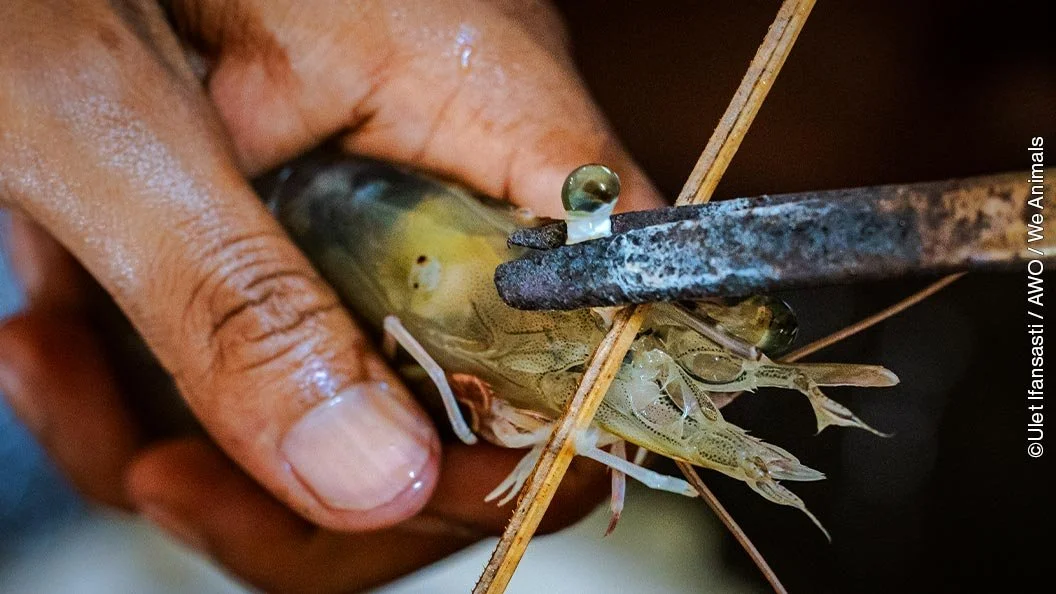
Eyestalk ablation in breeding farms has been performed since the 1980s and is widespread globally, aiming to induce rapid ovarian maturation and a higher yield of eggs that will become the shrimp for consumption. The cutting of the eye is performed without any type of anesthesia. At the end of their productive life, these females are sold at a very low price.
At the Animal Welfare Observatory, we wanted to expose this reality to the world to make people aware of the impact behind what they are consuming. But also, and primarily, so that they demand better conditions through the supermarkets that offer these products. Large companies have the responsibility to make these changes or to demand them through firm commitments that include, for example, environmental and social quality certifications, alongside a ban on the practice of eyestalk ablation and a transition toward slaughter systems with effective stunning.