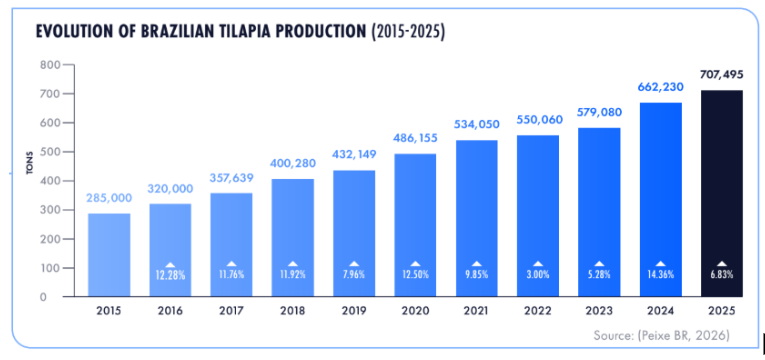
By Caroline Maia, AlianimaBrazil’s tilapia industry has grown dramatically over the past decade. In 2025, the country produced approximately 707,500 tons of tilapia, a 148.2% increase in the last decade. This rapid expansion has brought new opportunities, but also new challenges. As the sector becomes more technologically advanced and more closely connected to domestic and international markets, issues such as efficiency, quality, traceability, transparency, innovation and competitiveness are gaining importance.
Fish Watch - 3rd edition (2026)
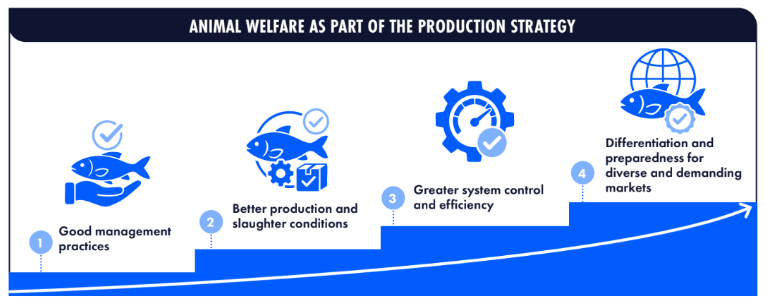
Fish welfare is becoming part of this broader conversation. The question is no longer simply whether it should matter, but how it can be incorporated into a sector that is already evolving—and how engaging with the issue proactively could help producers and companies prepare for changing scientific knowledge, market expectations and societal concerns.
The Fish Watch — 3rd edition, an initiative by Alianima created to increase transparency and foster discussion about fish welfare in Brazil’s fish farming sector, focused on tilapia farming, bringing together scientific data, market trends, strategic analysis and perspectives from different actors across the value chain. The report identifies evidence, knowledge gaps and possible pathways for advancing this area in Brazilian aquaculture.
What does science already tell us about tilapia production and welfare?
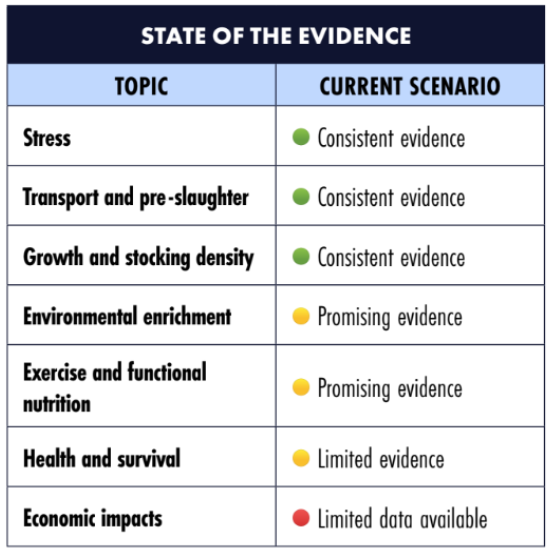
Research on tilapia welfare is still developing, and important knowledge gaps still remain. Nevertheless, existing studies provide evidence that conditions related to production, management and slaughtering can affect both fish welfare and productive indicators in the same direction, including growth, survival, product quality and production losses.
Fish Watch - 3rd edition (2026)
On the other hand, there is still little information on the real economic returns from better production practices. Although fish welfare should not be reduced to a productivity tool, understanding its connections with production and management can help identify opportunities for better decision-making and continuous improvement.
Is fish welfare worth the investment?
As improving welfare can require investments in infrastructure, technology, training, monitoring and management, an important question is how these investments translate into practical outcomes. While potential benefits may extend beyond individual production indicators, including reduced avoidable losses, greater process control, product quality, predictability, transparency and preparedness for future market expectations, the evidence available today does not allow us to provide a simple economic answer.
But this must not prevent the implementation of validated win-win practices in today’s more competitive and globalized tilapia farming sector. Therefore, the question should change from “How much does it cost to produce with better fish welfare?” to a broader one:
How can the sector prepare to remain competitive in a food system that increasingly values quality, transparency and responsible production?
Fish Watch - 3rd edition (2026)
What has the sector already begun to perceive?
The conversation is already beginning to change. Interviews conducted for the report with professionals working across different parts of the tilapia value chain in Brazil—including production, genetics, technical consultancy and corporate relations—show that fish welfare is gradually entering discussions that were traditionally framed around other priorities.
Tilapia welfare can increasingly be connected to the main interests of the sector at the moment, particularly when broad concepts are translated into practical indicators and management decisions. Water quality, health, environmental conditions, stocking density, handling, feeding, transport and slaughter are not isolated issues: together, they shape the conditions experienced by fish throughout production, affecting their productivity.
The challenge now is to turn growing awareness into implementation.
Fish Watch - 3rd edition (2026)
What pathways are possible for the tilapia value chain?
Image credit: Unsplash_imsogabriel_stock
Anticipating change can be more strategic than waiting for new expectations to become mandatory. Incorporating better production practices gradually into everyday management can allow the sector to learn, generate evidence and adjust before future demands become more difficult to respond to. The report then proposes a continuous pathway: perceive changes, anticipate trends, make commitments, implement improvements, monitor results and learn from the outcomes.
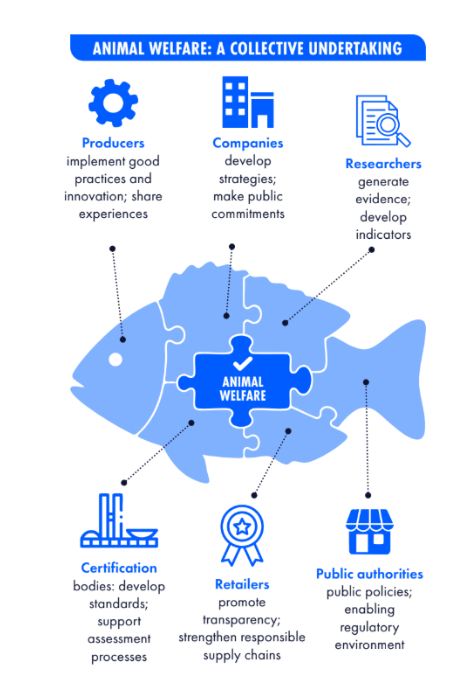
And it is worth mentioning that different actors have different roles in the process. Producers, companies, retailers, researchers, certification bodies, civil society and governments can contribute from different points in the value chain. Collaboration between these groups will be essential to translate scientific knowledge into practical and scalable solutions.
The window of opportunity is open
Brazil’s tilapia sector has reached a new level of scale and maturity. That growth creates an opportunity to consider fish welfare not as a separate agenda, but as part of a broader process of continuous improvement.
When grounded in scientific evidence and adapted gradually to production realities, welfare improvements may contribute to product quality, reduced losses, efficiency, transparency and competitiveness.
But realizing this potential will require collaboration between different stakeholders in the sector and more applied research. The window of opportunity is open. How we choose to engage with it will help shape the future of aquaculture.
Keep the conversation going
To explore these issues beyond the report, Alianima also hosted the second edition of its online webinar series, Conversas embaixo d’água (“Underwater Conversations”), “Tilapia, Value and Welfare: Building New Pathways for Aquaculture”, which is available in Portuguese, with English subtitles through YouTube’s automatic translation feature.
The event brought together two professionals with complementary perspectives on the tilapia value chain: a major tilapia producer and a researcher who works directly with the sector through technical consultancy. Together, they discussed some of the report’s central questions and the challenges and opportunities of bringing fish welfare into the reality of tilapia production.
Explore the full report and the webinar, and continue the conversation about how improving the welfare of aquatic animals can contribute to more responsible, transparent and resilient aquaculture.